
The MAVRA Products That Belong in a Victorian Gothic Space
Why Victorian Gothic Is One of the Most Demanding Aesthetics to Build For
Victorian Gothic is one of the most historically grounded of the gothic aesthetics. It draws directly from a documented cultural moment — the Victorian era's relationship with death, mourning, and the decorative arts — and its interior vocabulary is specific: dark carved wood, heavy textiles, controlled candlelight, objects chosen for weight and permanence.
MAVRA makes three products. Each of them fits within this framework not because they were styled to look Victorian, but because the decisions behind them — material, finish, form — align with what Victorian Gothic requires of an object.
The Skull Candle Set: A Historically Appropriate Choice
Victorian mourning culture made extensive use of the skull as a symbol. It appeared in jewelry, in painted miniatures, in carved ornament, and on the surfaces of objects that were meant to be used daily. The memento mori tradition — remember that you will die — was not morbid in the Victorian context. It was a sincere engagement with mortality as part of lived experience.
The Skull Candle Set fits a Victorian Gothic space at this level. The skulls are not decorative novelties. They carry the same symbolic weight that Victorian skull objects carried — a reference to impermanence, to the passage of time, to the seriousness of existence. In a room that is built around Victorian Gothic principles, this is not an addition. It is a continuation.
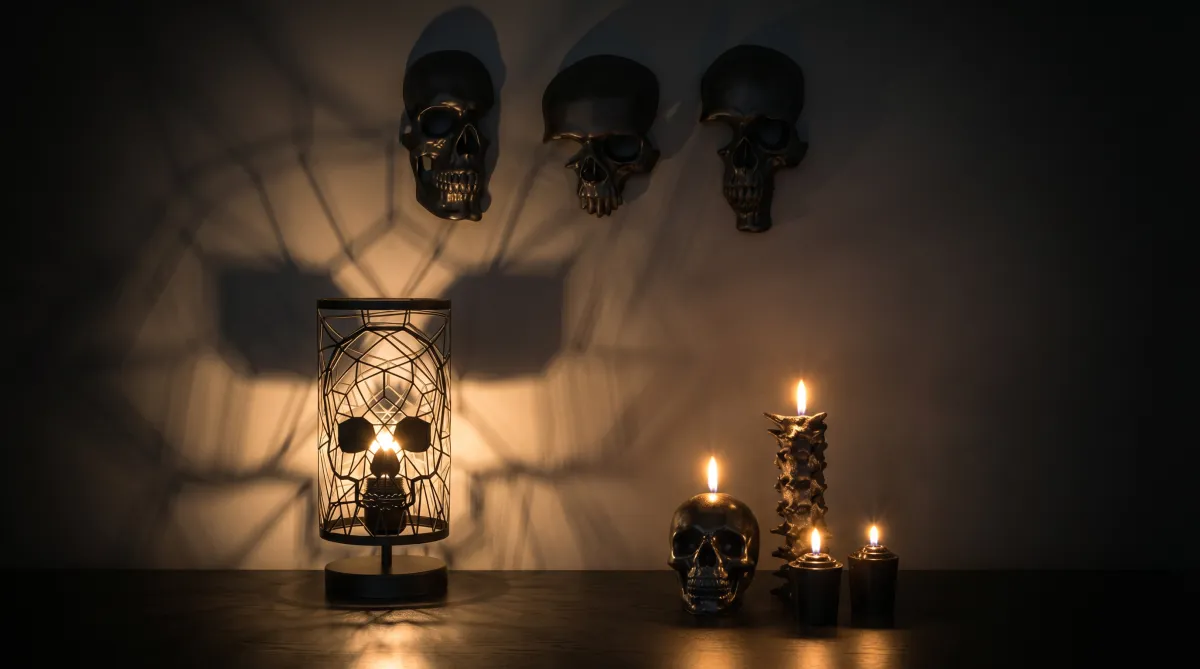
Practically, candlelight is the light source that Victorian Gothic rooms are built around. The warm, close, directional amber flame is the aesthetic standard against which everything else in the room is measured. The skull candle set produces this light correctly — intimate, contained, and warm enough to deepen rather than flatten the surfaces around it.
The Victorians understood that what sits on a surface every day says something about the person who placed it there. That logic has not changed.
The Skull Lamp: Controlled Light in a Victorian Interior
Victorian rooms were not uniformly lit. Gas lamps, candles, and oil lamps created defined zones of light in otherwise dark interiors. The light had direction. It came from specific sources, fell on specific surfaces, and allowed the rest of the room to remain in varying degrees of shadow.
The Skull Lamp maintains this logic. The warm amber from the globe bulb is contained and directional — it does not flood the room with light, it establishes a zone. In a Victorian Gothic bedroom or study, placing the skull lamp on a nightstand or desk creates the kind of intimate light zone that the aesthetic is built around.
The skull base also reads correctly in low light, which is the dominant condition of a Victorian Gothic room. The form produces shadow in the warm lamplight — the hollows deepen, the surface gains texture — in a way that flat bases do not. The lamp is doing what Victorian decorative objects were designed to do: gaining weight as the light changes.
The Wall Decor: Installation in the Victorian Tradition
Victorian walls were never bare. They were hung with framed portraits, mounted sconces, ornamental plates, and decorative objects arranged with deliberate formality. Empty wall space was, in the Victorian interior logic, unfinished space.
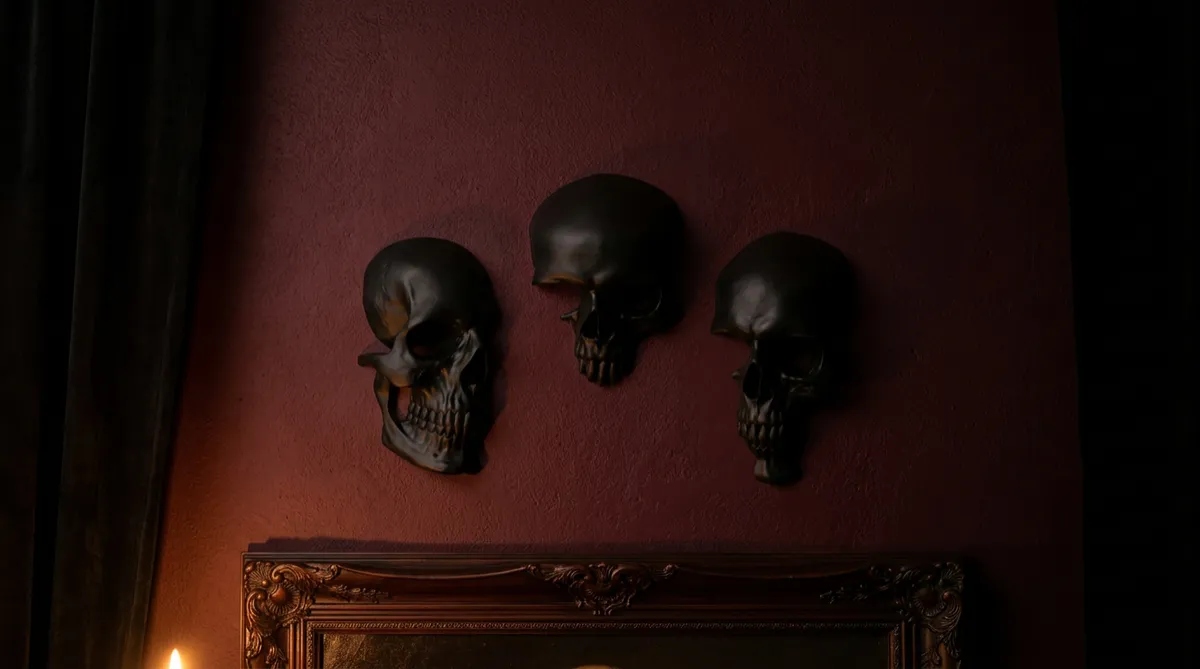
The Skull Wall Decor continues this tradition. The dimensional stone-finish resin pieces install flush against the wall and produce the kind of formal, considered presence that Victorian installation logic demands. They are not casual objects leaned against a surface. They are mounted, permanent, and placed with intention.
The correct Victorian placement is formal: centered on a wall panel, arranged symmetrically, or grouped deliberately above a significant piece of furniture — a mantle, a desk, a writing table. The arrangement should look chosen, not accumulated. Victorian Gothic spaces are not maximalist in the Whimsigoth sense. They are dense, but with formal logic underlying the density.
The stone-finish resin surface also holds up correctly in the low-light Victorian interior. Under candlelight, the dimensional depth of the skull forms produces shadows that gain and change as the flame moves — precisely the kind of dynamic that Victorian ornament was designed to produce.
How These Three Pieces Work Together
In a Victorian Gothic room, the three MAVRA products occupy distinct functional roles. The candle set is the primary light source — intimate, warm, placed where the room needs to be marked. The lamp extends this light into zones that candles alone cannot reach, while maintaining the same warm color temperature. The wall decor establishes the formal, permanent presence of the gothic symbol on the room's vertical surfaces.
What connects them is the shared logic of their making: materials chosen for permanence, finishes that hold up under close examination, forms that are not softened for a wider audience. In a Victorian Gothic space, this alignment is visible. The room knows when an object belongs and when it is approximating. These three pieces belong.


Mail
Facebook
LinkedIn
X
Pinterest